Engineering
Otto
Overview
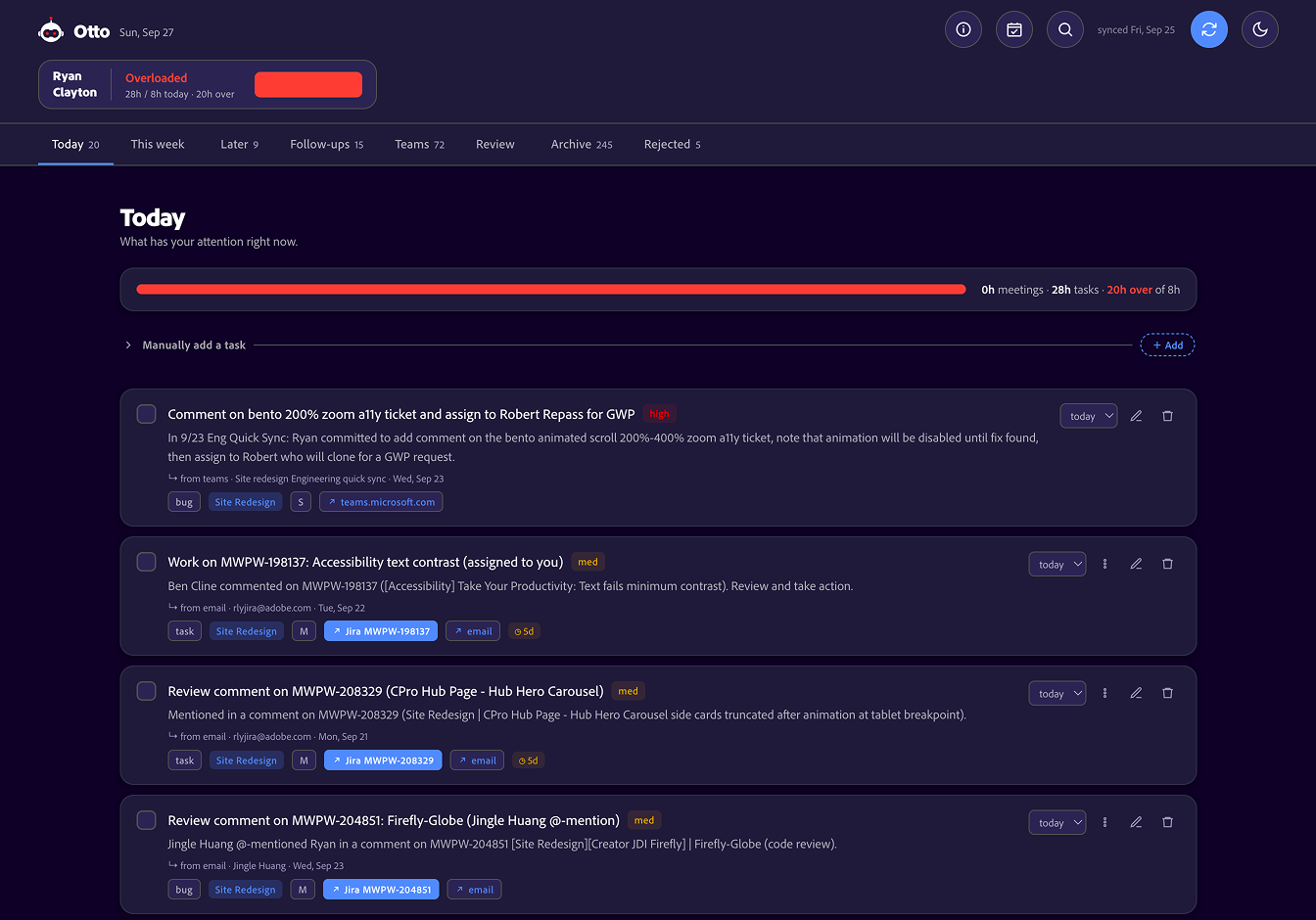
When the velocity of the Site Redesign outpaced the coordination around it, things started falling through the gaps between teams — replies owed, threads stalled, context lost across three inboxes. Otto was the answer I built rather than waited for. It answers one question every morning: what do I owe people, and can I take on more — without digging through Slack, email, and Teams myself to find out. A small static web app paired with an agent skill that scans those three sources and turns anything that needs a follow-up into a task, or a “loop” — a thread that’s waiting on my reply.
What I built
A capture/display split — the scanning skill decides what counts as a task or a loop and writes it to a local data file; the app itself (one HTML file, one CSS file, one vanilla JS file — no framework, no build step) only ever reads and renders it. Keeping those responsibilities apart made both sides easier to get right independently.
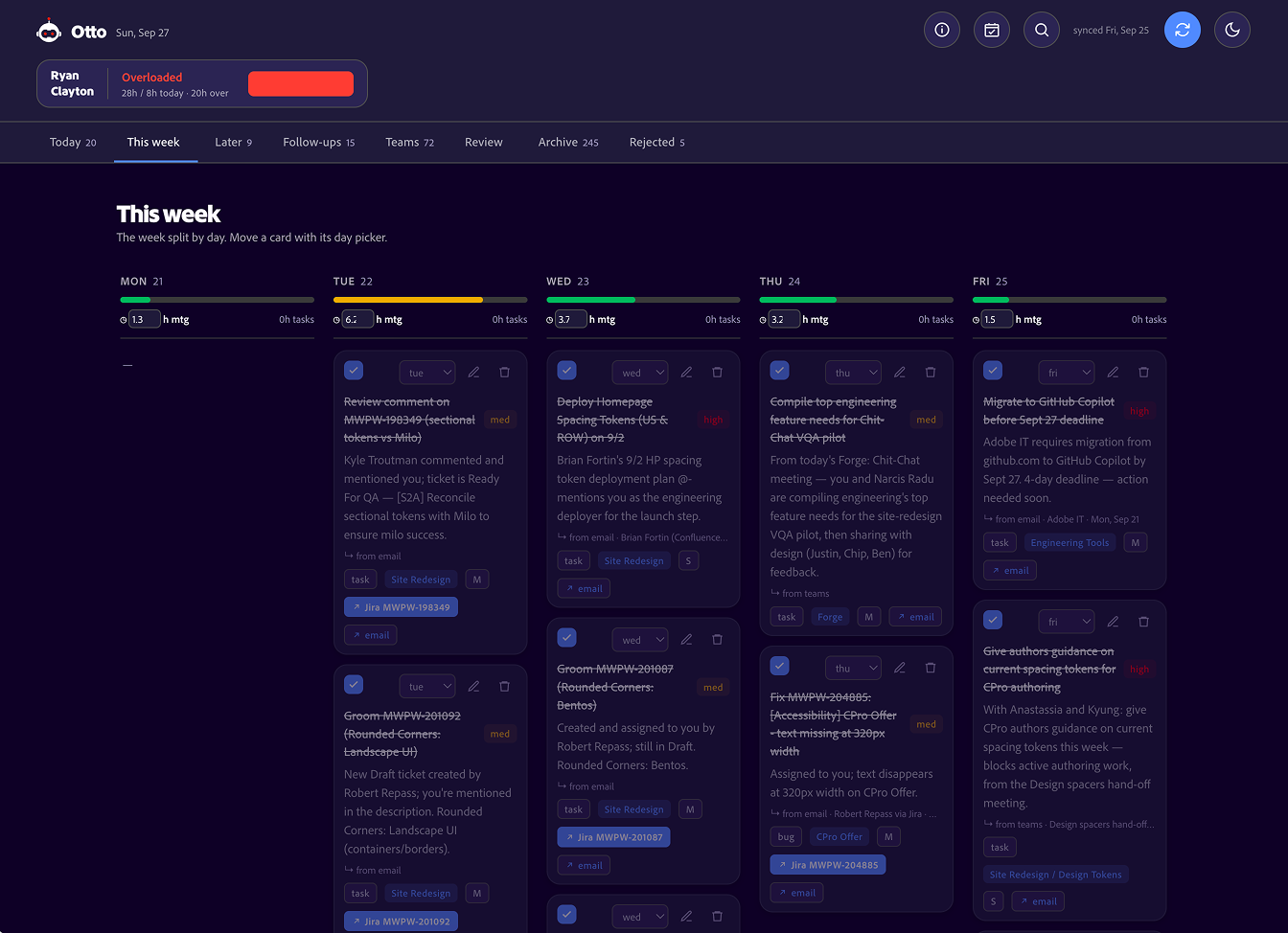
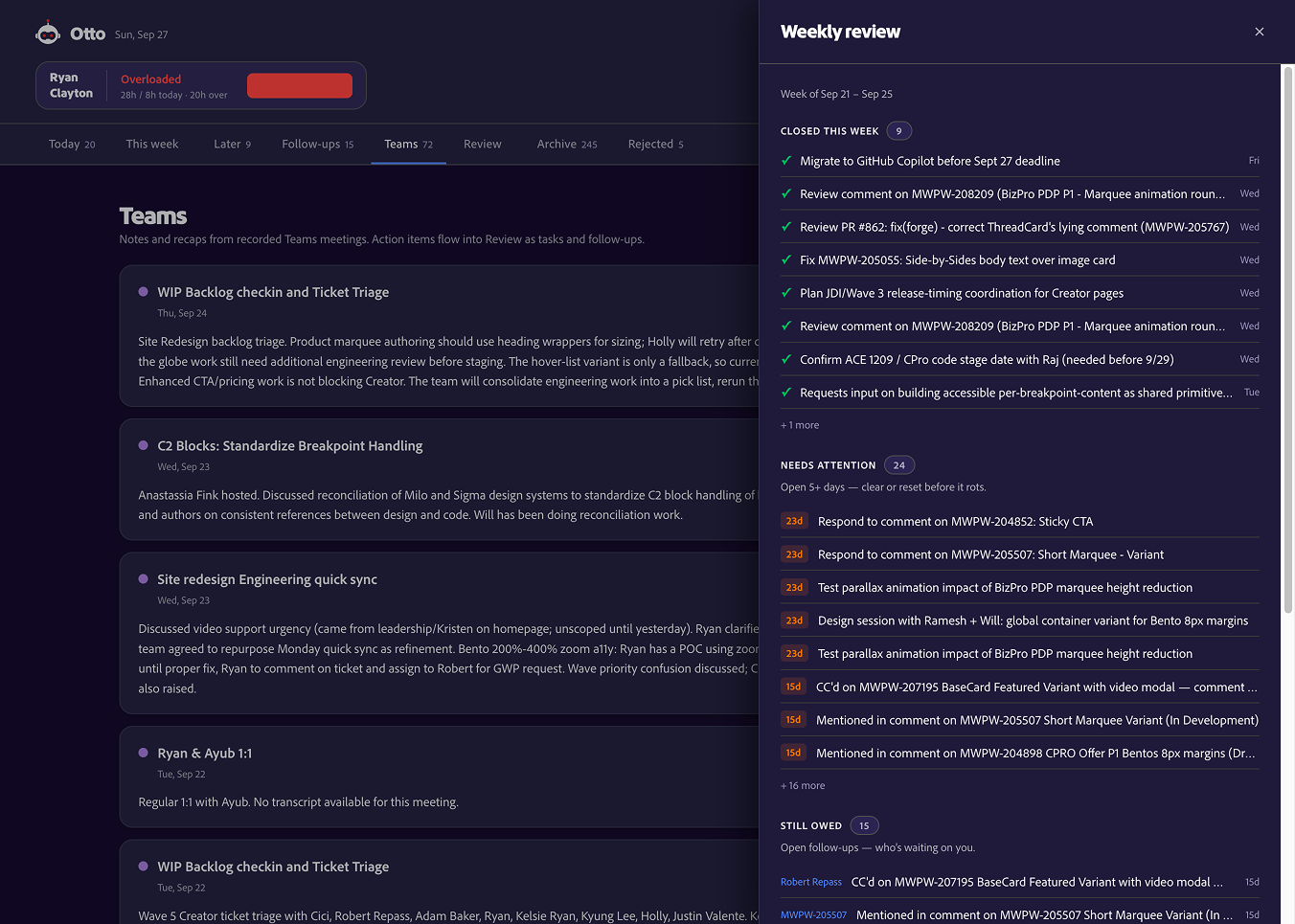
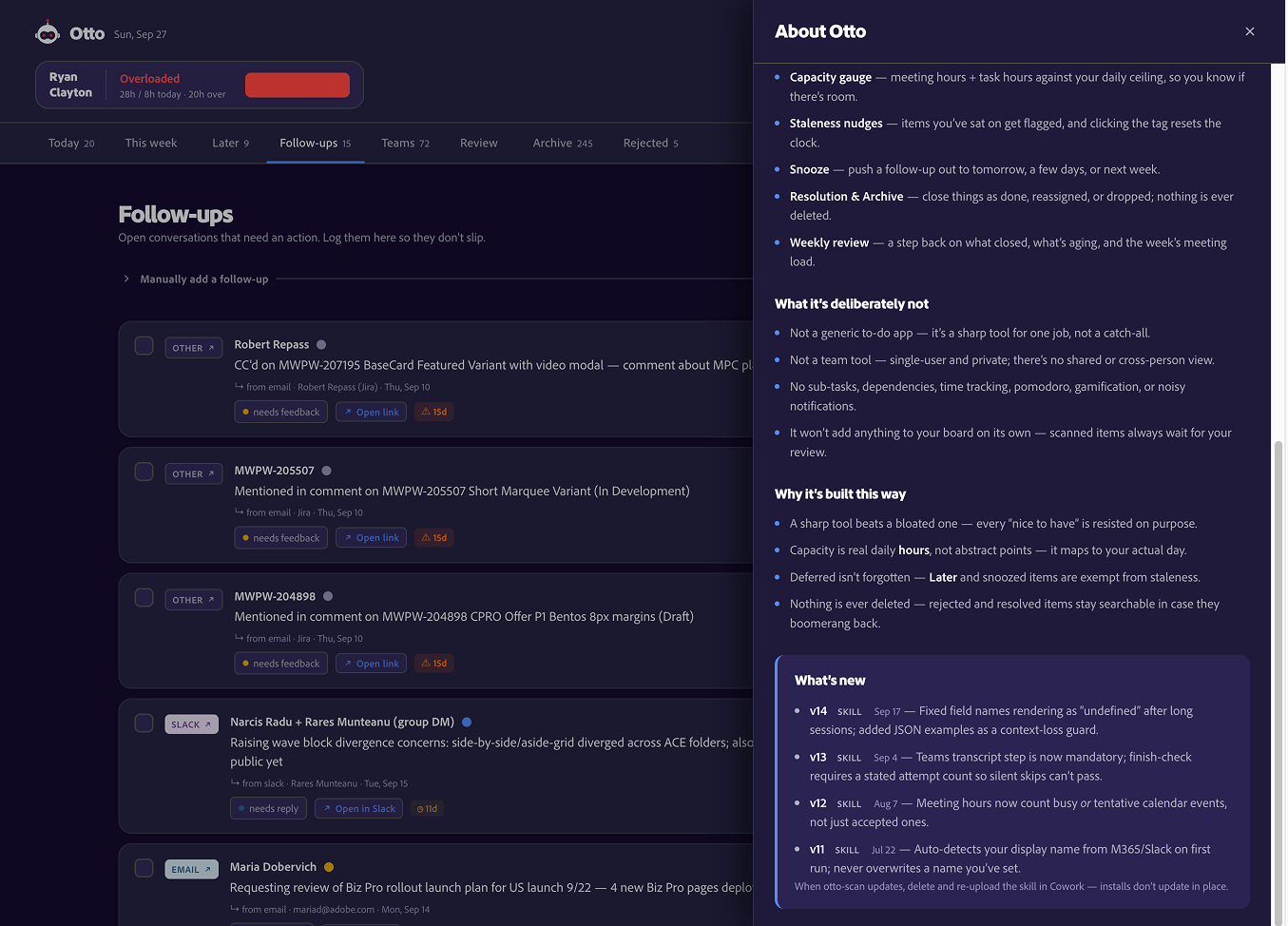
A real information architecture, not a single list — Today, Week, Later, Loops, Teams, Archive, Rejected, and a dedicated Review mode. Loops are kept separate from tasks on purpose: “someone is waiting on me” and “I have work assigned” are different kinds of pressure, and conflating them was the first version’s biggest mistake.
A structural checker, not just a linter — a small script that walks the rendered markup looking for the failure modes generic tooling misses in a single-file vanilla app: a view with no matching tab, a render function that’s never wired into the main render loop, an event handler bound to an element that no longer exists. Syntax checking alone doesn’t catch any of that; this does.
What I learned
Building a tool only I would use removed every excuse to over-engineer it — no framework, no build step, just the smallest thing that could scan three inboxes and tell me the truth about my day. The capture/display split ended up being the one architectural call that made every later change easy: nine times out of ten, a change request turns out to be about how Otto shows what it already knows, not what it’s allowed to know in the first place.
Screenshots